

Table of Contents

When your HVAC system starts showing signs of trouble, homeowners are often faced with one of the most stressful decisions in home maintenance: do you repair what is broken or replace the system entirely? The answer is not always straightforward. Repairing may seem like the cheaper and easier option at first glance, but a closer look often reveals hidden costs in energy inefficiency, ongoing repairs, and overall comfort. On the other hand, replacing your system requires a larger upfront investment but can deliver peace of mind, energy savings, and increased home value.
At Utah Mechanical Heating and Air Conditioning, we serve families and businesses across Northern and Central Utah, including Weber, Davis, Salt Lake, Box Elder, Morgan, and Tooele counties. Every home is different, but the principles below can help guide you toward a smart, cost-effective choice.
The Reality of Repair Costs
When something goes wrong with your HVAC system, your first instinct is usually to repair it. The technician diagnoses the problem, provides an estimate, and the immediate cost often feels easier to stomach than the price of a brand new unit.
Repairs can range from minor to major. Some of the most common include thermostat problems, leaking ductwork, clogged filters, and issues with electrical components like motors, sensors, or capacitors. These repairs might cost only a few hundred dollars. Larger repairs such as refrigerant leaks or compressor replacements can climb into the thousands.
The appeal of repair lies in its immediacy. You spend less upfront, your system starts running again, and your home becomes comfortable once more. However, there are hidden financial risks. If your system is older and requires repeated service calls, repair costs can add up quickly. An air conditioner or furnace that breaks down once may very well break down again soon. Paying $400 here and $700 there several times a year quickly rivals the price of replacement.
There is also the issue of efficiency. Systems that require frequent repairs often operate at reduced capacity, consuming more energy to produce less heating or cooling. This means higher monthly utility bills. While a repair might get your system running again, it rarely restores full efficiency in an older unit.
The Investment of Replacement

Replacement is the other side of the coin. It is the bigger upfront commitment that many homeowners hesitate to make, but it can also be the most financially sensible choice in the long run.
The cost of replacing an HVAC system in Utah typically falls between six and twelve thousand dollars depending on the size of your home and the complexity of the installation. This includes the new equipment itself, professional installation, removal of the old unit, and often additional upgrades such as ductwork improvements or a smart thermostat.
At first glance, that is a major financial leap compared to a smaller repair bill. But replacement comes with long term rewards that are hard to ignore. Modern HVAC systems are significantly more energy efficient than those manufactured even ten years ago. A high efficiency furnace or air conditioner can reduce monthly utility bills by fifteen to thirty percent. That savings accumulates year after year.
Replacement also reduces maintenance costs. A new system usually comes with a strong manufacturer’s warranty that covers parts and sometimes labor for five to ten years. During that time, the likelihood of expensive repairs is minimal. You also gain improved comfort and reliability. Newer systems regulate temperatures more evenly, control humidity better, and often include enhanced filtration for cleaner indoor air.
Finally, a new HVAC system increases the resale value of your home. Prospective buyers view a modern heating and cooling system as a major plus, knowing they will not need to make that investment themselves for many years.
How to Decide Between Repair and Replacement

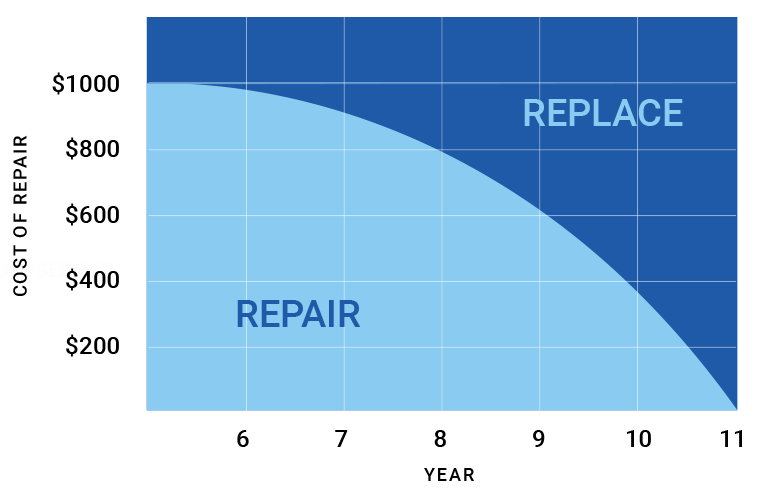
So how do you weigh the two options? The first factor is age. If your HVAC system is under ten years old, repair is usually the smarter choice, especially if the issue is minor. If your system is between ten and fifteen years old, the decision is less clear. For older systems beyond fifteen years, replacement almost always delivers better long term value.
A second guideline is known as the fifty percent rule. If the cost of repairing your system is more than half the cost of a new unit, replacement is generally recommended. For example, if a compressor repair is quoted at four thousand dollars while a brand new system costs eight thousand, the replacement is a wiser investment.
You should also look at the frequency and severity of breakdowns. A one time repair on an otherwise reliable unit may be reasonable. However, if you find yourself calling an HVAC technician multiple times each season, replacement will often save you more in the long run.
Efficiency is another key factor. Even when older units can be repaired, they often run at lower efficiency. A fifteen year old air conditioner that was once rated at 13 SEER may now perform closer to 8 SEER, far below today’s standards. This loss of efficiency means higher bills each month. By upgrading, you stop overpaying for wasted energy.
Finally, consider comfort and peace of mind. If you are tired of uneven temperatures, excessive humidity, or the stress of worrying about the next breakdown, replacement can provide intangible but very real benefits.
Additional Considerations for Utah Homeowners
Living in Utah means dealing with a wide range of temperatures, from triple digit summer heat to frigid winter nights. This climate puts more strain on HVAC systems than in milder regions, which makes reliability and efficiency even more important.
Energy-efficient systems not only save money but also reduce strain on Utah’s power grid. According to the U.S. Department of Energy, high-efficiency systems can significantly reduce household energy use, which benefits both your wallet and the environment.
Utah homeowners should also check for rebates or incentives. Utilities and state programs sometimes offer financial incentives for installing energy efficient systems. These can reduce the cost of replacement and shorten the payback period.
Financing is another option worth exploring. Many HVAC companies, including ours, provide flexible financing plans that spread the cost of replacement over time. This can make the decision easier for families who want the benefits of a new system without the full financial hit all at once.
Real World Scenarios
Imagine a homeowner in Ogden whose ten year old furnace has a faulty sensor that will cost three hundred fifty dollars to repair. Because the unit is still relatively young and has had no prior issues, repair is the right decision.
Now consider a homeowner in Salt Lake City with a twelve year old heat pump that needs a new compressor. The repair is quoted at three thousand five hundred dollars, but the system has also required two other significant repairs in the last two years. In this case, replacement is the more economical path.
Finally, picture a homeowner in Davis County with an eighteen year old furnace that has a cracked heat exchanger. The repair would cost five thousand dollars, while a complete system replacement is quoted at ninety five hundred. Replacement is clearly the smarter choice, offering higher efficiency and peace of mind.
Why Work With Utah Mechanical Heating and Air Conditioning
We have been serving homeowners across Northern and Central Utah for years, and we understand the unique demands our climate places on HVAC systems. Whether you are in Weber, Davis, Salt Lake, Box Elder, Morgan, or Tooele County, we provide honest assessments and professional service to help you make the right decision for your home.
Our team does not believe in high pressure sales. Instead, we explain your options clearly, provide written estimates, and help you weigh repair versus replacement with your budget and comfort in mind. We also stay up to date with utility rebates and tax credits so you can maximize savings when replacement makes sense.
Final Thoughts
The choice between repairing and replacing your HVAC system is not always easy. Repairs may cost less today, but they can add up quickly while leaving you with an inefficient and unreliable system. Replacement costs more upfront but often pays for itself through energy savings, reduced repairs, and improved comfort.
By considering the age of your system, the cost of the repair, its efficiency, and your long term plans for your home, you can make a confident decision. And if you are still uncertain, consulting with a trusted HVAC professional can provide the clarity you need.
Utah Mechanical Heating and Air Conditioning is here to guide you every step of the way. Whether you choose repair or replacement, our goal is to keep your home comfortable, efficient, and safe for years to come.